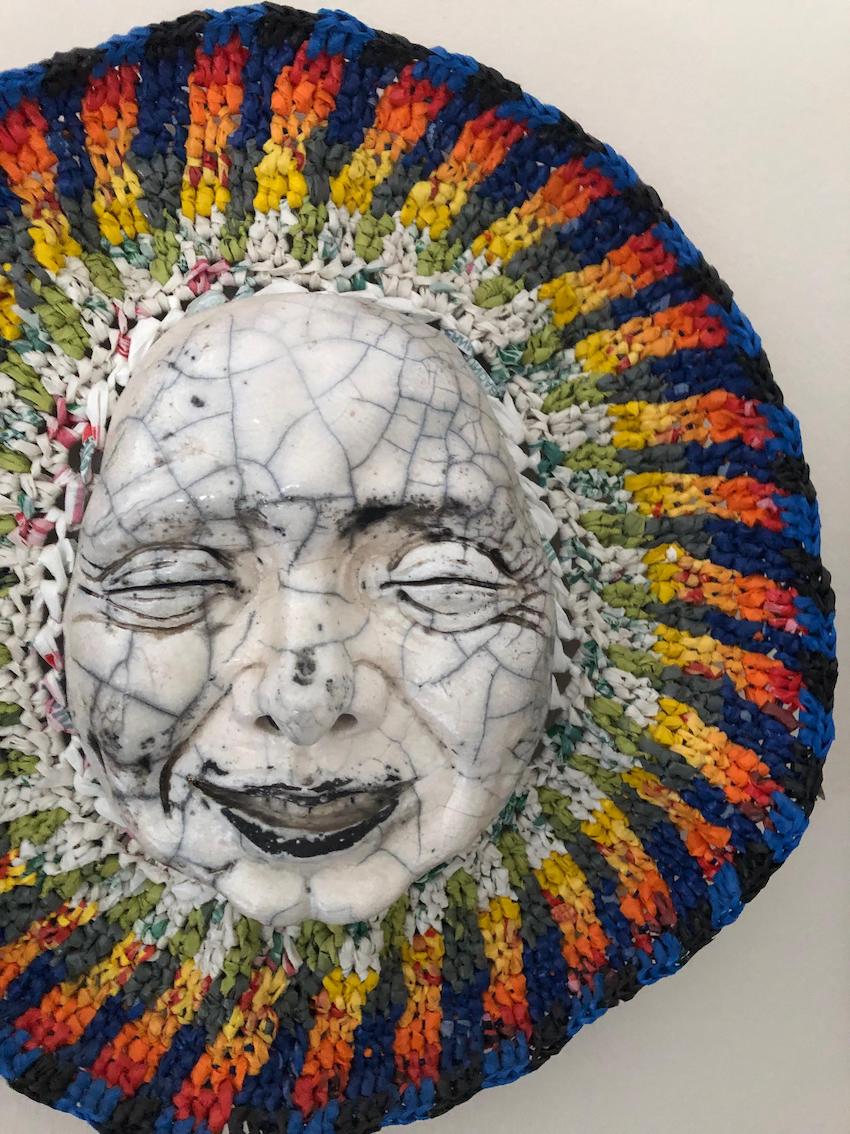
The Making of Masks
A ritual of heat, smoke and water.
This visual sequence of raku firing shows Evan Oberholster’s ceramic masks from kiln to cooling, revealing the dramatic transformation that gives rise to their distinctive crackled and smoke-marked surfaces.
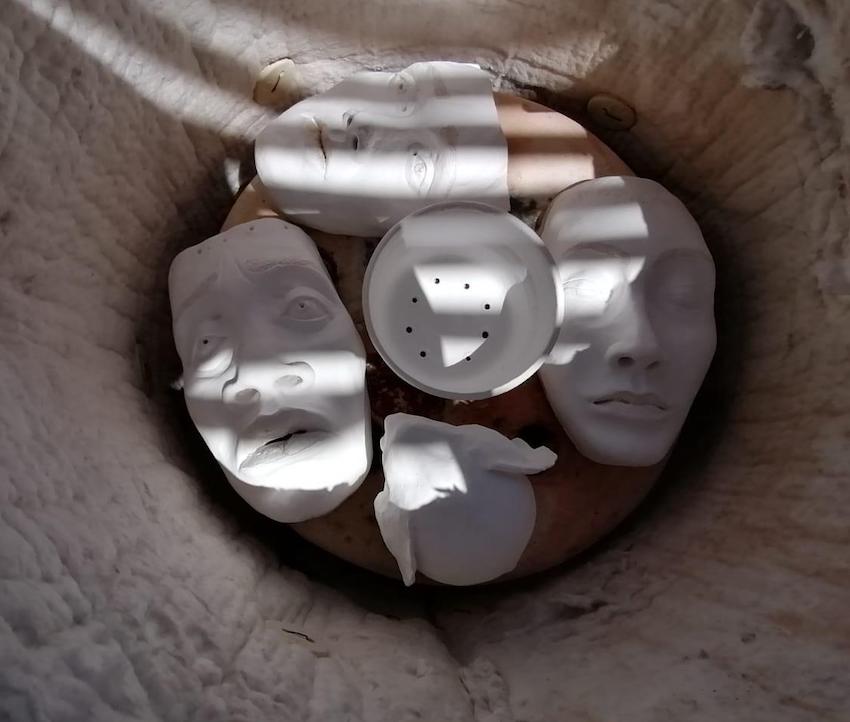
Kiln Ready
The raku kiln carefully filled with ceramic ware moments before firing. Each piece will react differently to the firing process, depending on glaze composition, placement and temperature exposure.
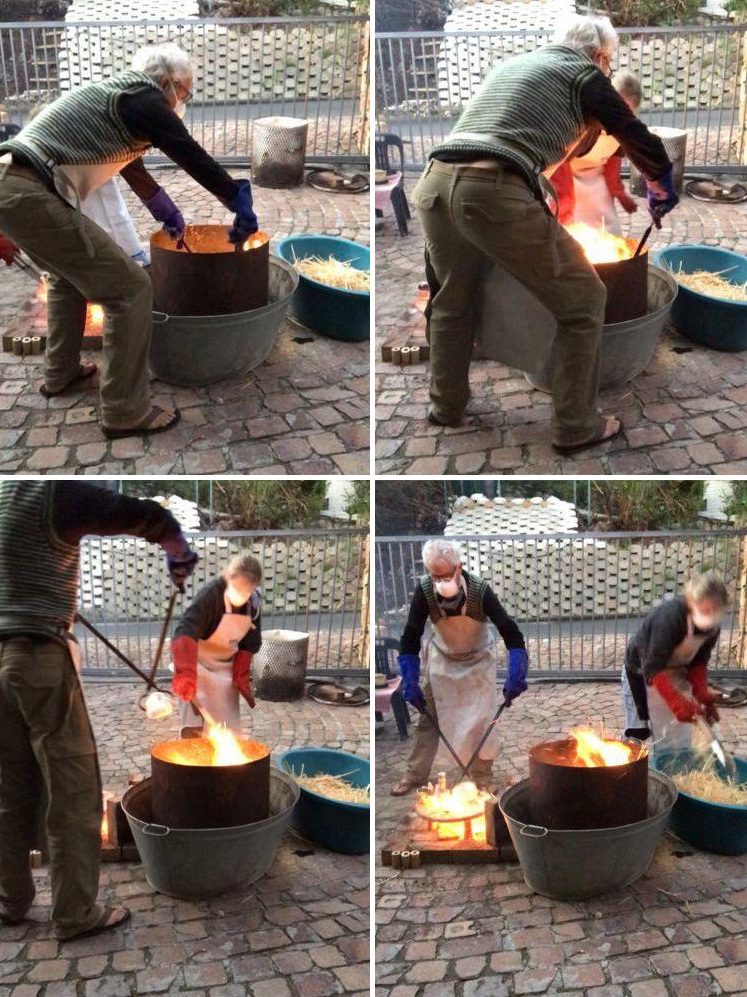
Red-Hot Retrieval
The crucial moment of raku firing — at peak temperature, the masks are removed from the kiln using metal tongs and are buried in sawdust. The brief exposure to air during the transfer begins the cooling that crackles the glaze, while the smouldering sawdust starves the masks of oxygen — the reduction that defines the characteristic raku surface effects.
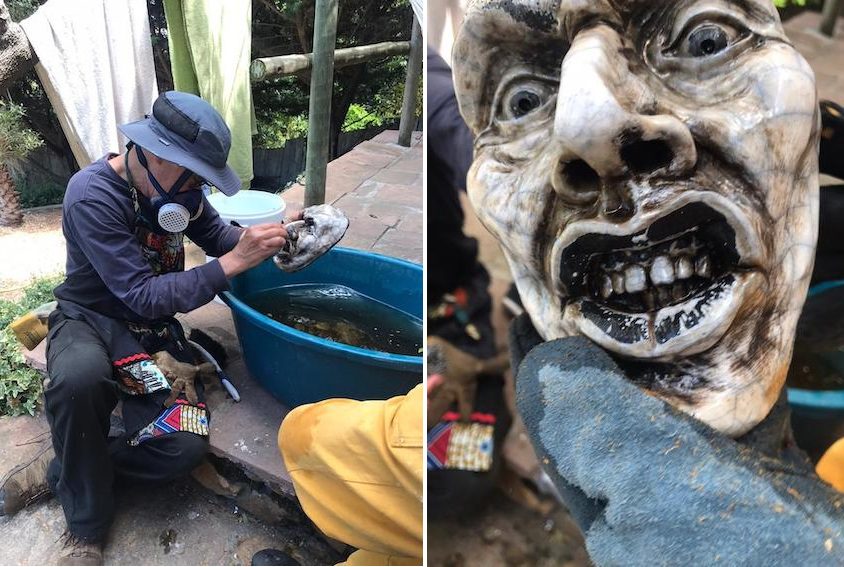
Revealing the Surface
After firing, soot and ash are scrubbed from the surface, revealing the fine craquelé pattern created as the glaze contracted and fractured under thermal shock.
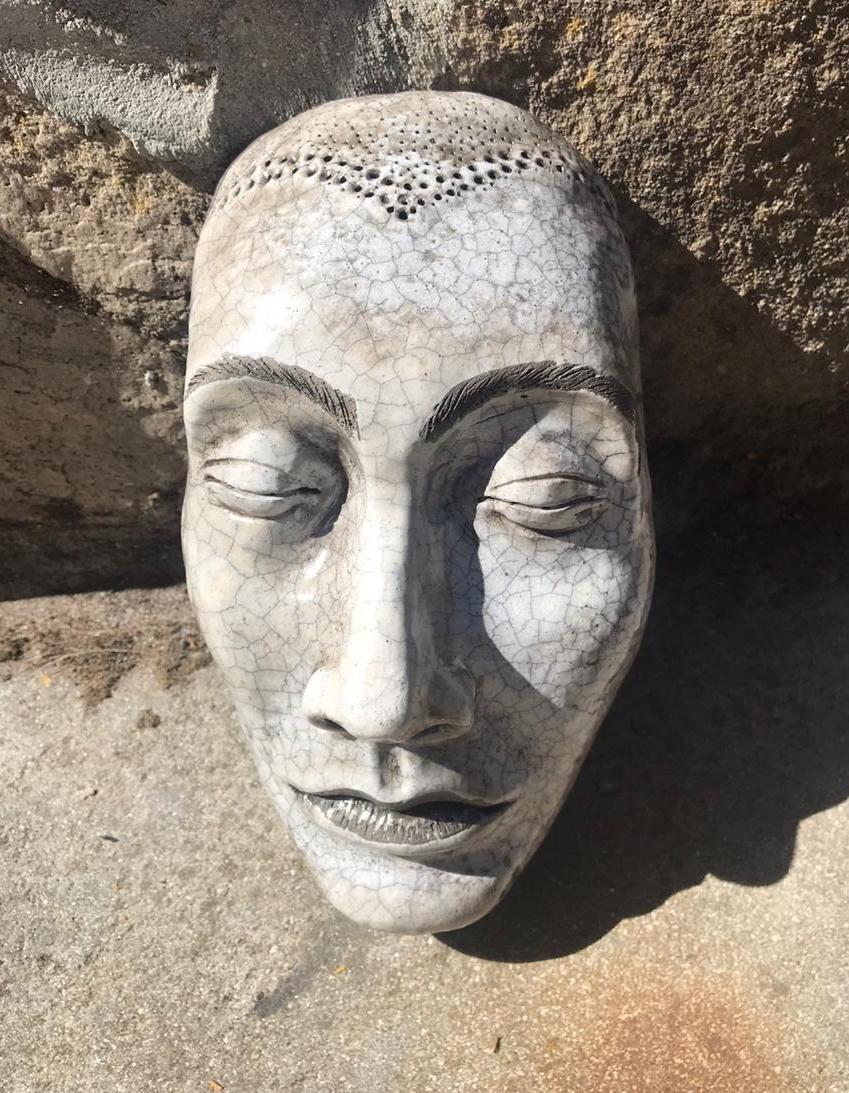
Emerging Forms
Still damp and partially cleaned, the luminous crackled glaze of this mask is visible underneath the soot-covered surface.
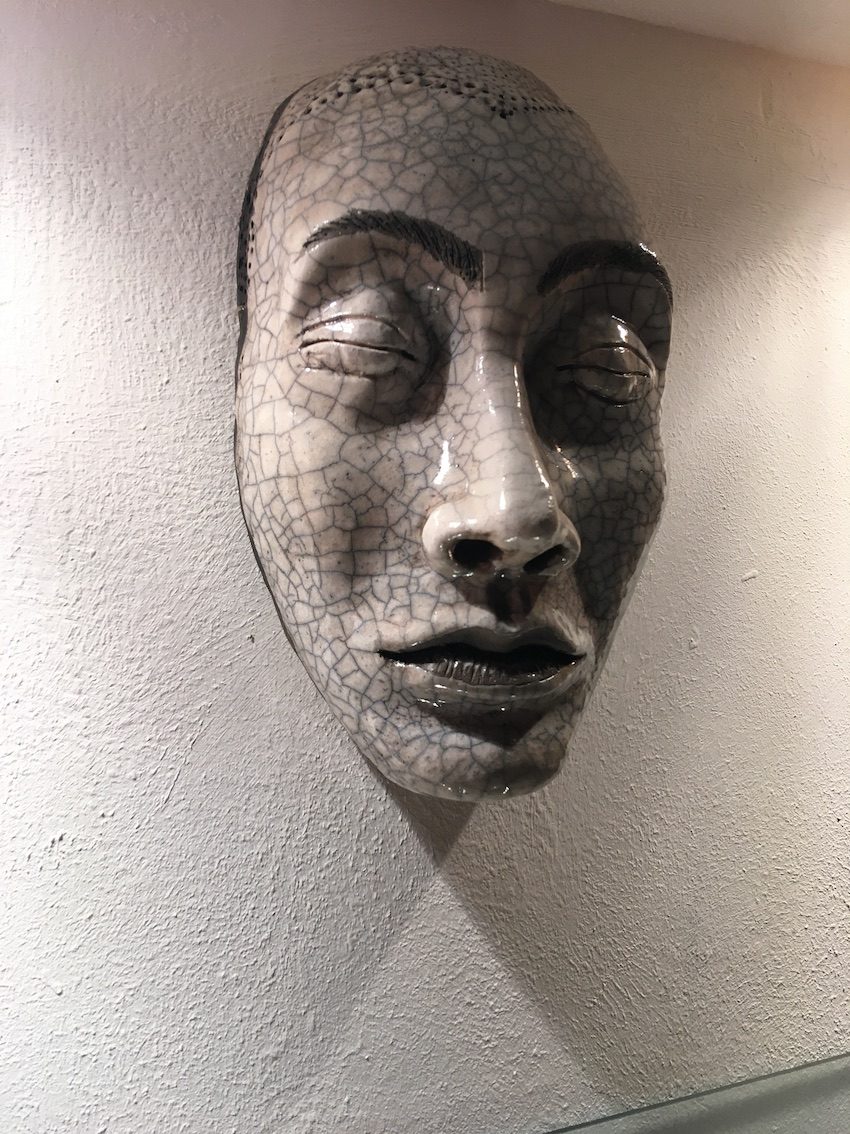
Transformation Complete
Finally, the mask is fully cleaned to reveal the fine craquelé and subtle surface sheen of the finished piece — embodying the full alchemy of raku.
Evan Oberholster’s Raku-Fired Ceramic Masks
Evan’s raku-fired ceramic masks develop their distinctive finishes through fire and smoke. Each mask is hand-shaped, bisque-fired and glazed before being placed in an outdoor raku kiln. Removed while red-hot, it is buried in sawdust, where smoke, heat and carbon stain and sear the surface, creating the distinctive patterns and textures of raku firing. The result is a richly tactile finish marked by craquelé (fine crackle) and dark, carbon-drawn lines that lend each piece a sense of aged depth and intricate surface patterning.
Raku (楽焼), meaning “enjoyment” or “ease”, originated in 16th-century Kyoto as a pottery tradition for the Japanese tea ceremony (chanoyu 茶の湯), where makers prized spontaneity, modesty and the intimate, hand-made presence of each bowl. In the 20th century, Western ceramists reinterpreted this tradition, introducing post-firing reduction with combustible materials and transforming raku into a sculptural process rather than one confined to functional wares.
For Evan, the making is as vital as the image itself: pulling incandescent masks from the kiln, burying them in sawdust or letting them smoulder in open air, then washing and revealing the cooled forms. It is a ritual of heat, smoke and water — each mask carrying the visible language of its own creation. The process concludes with careful refinements: cleaning, accenting and occasionally combining the fired masks with mixed-media elements.